
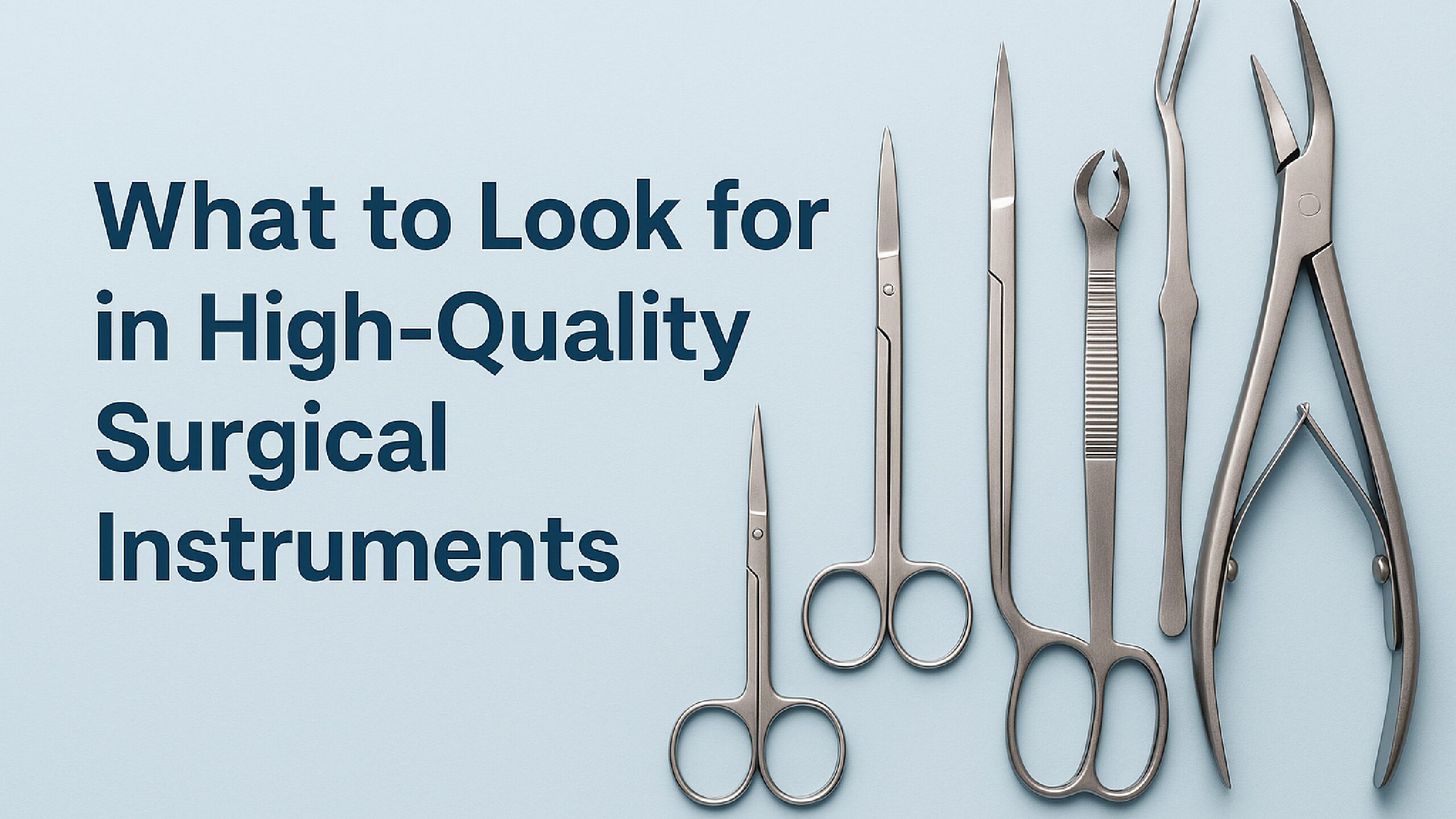

As modern medicine continues to evolve, surgical procedures have become increasingly sophisticated and precise, placing greater demands on the quality of the instruments used. Whether in a busy hospital operating room, a specialized clinic, or a cutting-edge research facility, medical tools for surgery must consistently deliver high performance to ensure patient safety, procedural accuracy, and successful treatment outcomes. But what truly distinguishes a high-quality surgical instrument? What should surgeons, medical practitioners, or procurement teams consider when selecting these critical tools? This article explores the essential attributes that define top-tier surgical instrumentation and explains why choosing the right equipment is more important than ever.
Table of Contents
1. Material Composition
The first and perhaps most crucial characteristic of a high-quality surgical instrument is the material used in its construction. Surgical tools are typically made from high-grade stainless steel due to its corrosion resistance, strength, and durability. However, not all stainless steel is created equal. Look for instruments crafted from surgical-grade alloys like 304 or 316 stainless steel, which offer better resistance to rust, pitting, and wear.
In some cases, other materials such as titanium, tungsten carbide, or polymers are used depending on the type of procedure or need for lightweight, MRI-compatible, or precision-focused instrumentation. The right material not only enhances performance but also ensures the tool can withstand repeated sterilizations without compromising integrity.
2. Craftsmanship and Precision Engineering
The quality of a surgical instrument heavily depends on the level of craftsmanship and engineering behind it. Precision manufacturing is essential to ensure each part—whether it’s the blade of a scalpel, the hinge of a forceps, or the teeth of a rongeur—performs seamlessly and reliably during use.
High-quality instruments feature smooth, clean lines, secure joints, and exacting dimensions. There should be no rough edges, loose components, or signs of poor alignment. The tactile feel and balance of the instrument in the surgeon’s hand are also telling indicators. An expertly crafted tool will feel well-weighted, agile, and responsive, enabling greater control during delicate procedures.
3. Function-Specific Design
Not all surgical instruments serve the same purpose, and high-quality tools are often distinguished by how well they are suited to their specific use. Instruments must be designed to facilitate a particular surgical function—cutting, dissecting, grasping, retracting, or suturing—without adding unnecessary complexity or causing fatigue during prolonged use.
Function-specific design includes aspects such as ergonomic handles, curved tips, or fine-point ends that allow for greater precision. For instance, in orthopedic surgery, tools must be capable of handling robust tissue and bone without slipping or damaging surrounding structures. The inclusion of subtle design modifications, like non-slip grips or tension-controlled hinges, can significantly enhance usability.
4. Surface Finish and Coating
The surface finish of a surgical instrument plays a critical role in both functionality and sterility. High-quality instruments typically feature a satin or matte finish that reduces glare under surgical lighting. Polished finishes are sometimes used for specific procedures but may cause reflection issues in well-lit operating environments.
Instruments may also have coatings such as diamond dust, Teflon, or ceramic to enhance grip, reduce friction, or prevent sticking of tissues. Coatings must be biocompatible, non-toxic, and resilient enough to remain intact through numerous sterilization cycles.
5. Compliance with Medical Standards
Every region has its own set of regulatory and quality assurance standards for medical devices. A dependable surgical instrument must comply with internationally recognized benchmarks such as ISO 13485, CE marking, or FDA approval. These certifications indicate that the instrument has been tested for safety, reliability, and performance in a clinical environment.
Purchasing tools that meet these standards gives healthcare providers peace of mind that the instruments are safe for use and won’t pose a risk to patients or surgical staff.
6. Ease of Maintenance and Sterilization
The best surgical tools are those that can be easily cleaned, disinfected, and sterilized without degradation. High-quality instruments are designed with smooth transitions between components, avoiding unnecessary crevices or junctions where biological debris might accumulate.
Detachable parts should be easy to disassemble and reassemble, while the materials used should be compatible with autoclaving, chemical disinfection, and other sterilization techniques. Additionally, the instruments should resist staining, warping, and corrosion even after repeated exposure to high temperatures and moisture.
7. Durability and Service Life
Surgical instruments represent a significant financial investment, so their longevity is a key concern. High-quality instruments maintain their shape, sharpness, and functionality over time with minimal wear and tear. This reduces the need for frequent replacements and lowers the risk of instrument failure during surgery.
Many top-tier instruments also come with warranties or guarantees that offer support and repair services, further enhancing their value. Choosing tools that are built to last ensures consistent performance and reduces long-term operational costs for the healthcare facility.
8. Manufacturer Reputation and Support
Not all surgical instrument manufacturers uphold the same standards. When assessing product quality, consider the reputation and reliability of the manufacturer. A well-established company with a history of innovation, adherence to safety protocols, and positive client feedback is far more likely to deliver trustworthy tools.
Furthermore, quality manufacturers typically offer robust customer service, including product training, after-sales support, and a transparent return policy. These added services enhance user confidence and promote optimal utilization of the tools.
9. User Feedback and Field Performance
Sometimes, the best insights come from the professionals who use the tools daily. Surgeons, nurses, and technicians are uniquely positioned to assess the real-world performance of surgical instruments. Their feedback on handling, accuracy, comfort, and performance under pressure can provide valuable direction when selecting new tools.
Peer reviews, published clinical studies, and direct testimonials can be excellent sources of information to validate a product’s claims before purchase.
10. Specialized Applications and Innovation
Today’s surgical landscape is evolving rapidly with the advent of minimally invasive techniques, robotic-assisted surgery, and enhanced imaging technologies. High-quality instruments should align with these innovations, offering compatibility with new surgical systems and supporting a wide range of procedures.
Whether the need is for delicate tools used in microsurgery or durable ones used in orthopedics, the chosen instruments must match the demands of the specialty. For example, orthopedic surgical instruments are uniquely engineered to manipulate bone and joint structures, requiring additional strength and mechanical precision.
Similarly, the growing availability of advanced medical tools for surgery reflects the need for innovation tailored to various disciplines. Investing in instruments that cater specifically to your area of expertise enhances both patient outcomes and procedural efficiency.
Conclusion
In any surgical setting, the instruments in a surgeon’s hand play a decisive role in the quality of care delivered. High-quality surgical instruments are more than just tools—they are extensions of the clinician’s skill, precision, and intent.
By evaluating factors such as material, design, durability, compliance, and user experience, medical professionals can make informed decisions when selecting instruments that align with their clinical goals. Whether outfitting an operating room for the first time or upgrading existing tools, prioritizing quality is a long-term investment in patient safety and surgical excellence.