

In today’s fast-evolving technological landscape, LED screens and walls are transforming how we learn, create, and communicate. From enhancing educational environments to revolutionizing filmmaking, these advanced display solutions are redefining visual experiences. This article explores the applications of LED screens for classrooms, LED walls for virtual production, and virtual set LED walls, highlighting their benefits, use cases, and future potential.
Table of Contents
LED Screens for Classrooms: Redefining Education
The traditional classroom has undergone significant changes in recent years, with technology playing a pivotal role in modernizing education. LED screens for classrooms are at the forefront of this transformation, offering dynamic, interactive, and engaging tools for educators and students alike.
Why Choose LED Screens for Classrooms?
LED screens are rapidly replacing outdated projectors and whiteboards in educational settings due to their superior performance and versatility. Here are some key advantages:
- High Visual Quality: LED screens deliver vibrant colors, sharp images, and high contrast, ensuring that every student, even those at the back of the room, can clearly see presentations, videos, or diagrams. Unlike projectors, LED screens maintain brightness and clarity in well-lit environments.
- Interactivity: Many modern LED screens come with touch capabilities, enabling interactive lessons where students can engage directly with the content. This fosters collaboration and active learning.
- Durability and Longevity: LED screens are built to last, with lifespans often exceeding 50,000 hours. They require minimal maintenance compared to traditional projectors, which need frequent bulb replacements.
- Energy Efficiency: LED technology consumes less power than older display systems, making it a cost-effective and eco-friendly choice for schools.
- Versatility: From displaying educational videos to hosting virtual field trips or enabling remote learning, LED screens adapt to various teaching needs.
Real-World Applications in Education
Imagine a history class where students explore ancient civilizations through immersive 3D visuals displayed on an LED screen for a classroom. Or a science lesson where complex biological processes are animated in stunning detail, capturing students’ attention. These screens can also integrate with learning management systems, display real-time data, or facilitate video conferencing with guest lecturers from around the world.
For example, a school in California recently installed large LED screens in its classrooms to support hybrid learning. Teachers reported increased student engagement, as the screens allowed seamless transitions between in-person and virtual content. Interactive features enabled students to solve math problems or annotate literature directly on the screen, making lessons more dynamic.
Challenges and Considerations
While the benefits are clear, schools must consider factors like installation costs, training for educators, and compatibility with existing technology. However, as LED screen prices continue to decrease, they are becoming more accessible for educational institutions. Grants and government funding for educational technology can further offset costs, making LED screens for classrooms a viable investment.
LED Walls for Virtual Production: Revolutionizing Filmmaking
In the world of filmmaking, LED walls for virtual production have emerged as a game-changer, enabling creators to craft immersive environments without relying heavily on green screens or location shooting. This technology, popularized by productions like The Mandalorian, allows filmmakers to create realistic, real-time backgrounds that enhance both creativity and efficiency.
What Are LED Walls for Virtual Production?
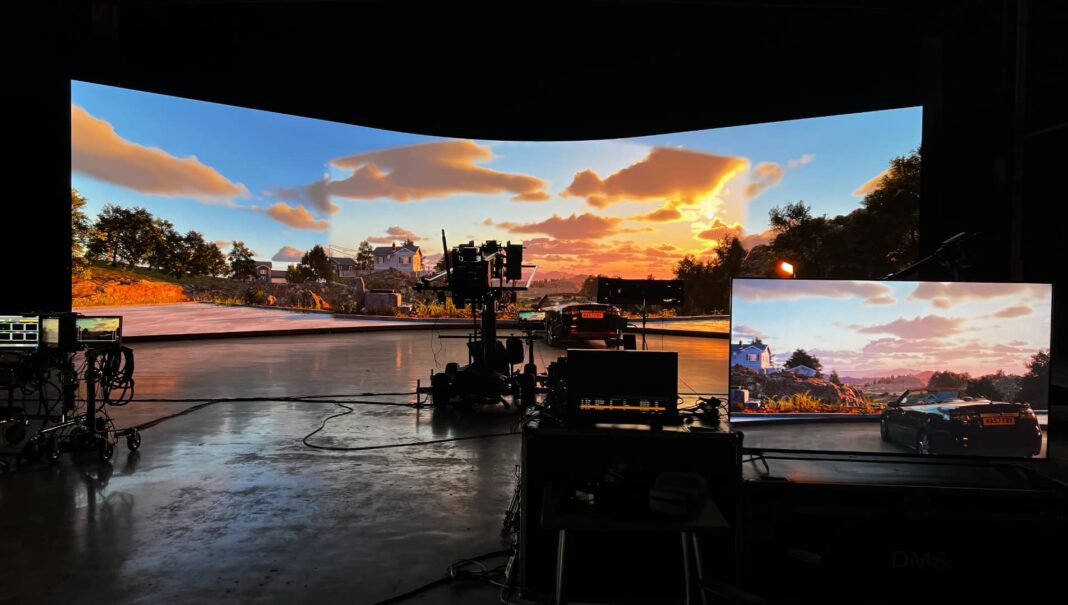
An LED wall for virtual production is a large-scale display composed of multiple LED panels that form a seamless, high-resolution backdrop. These walls are integrated with virtual production software and camera tracking systems to render dynamic, photorealistic environments in real time. Actors perform in front of the LED wall, which displays backgrounds that respond to camera movements, creating the illusion of a real-world setting.
Benefits of LED Walls in Virtual Production
- Realistic Lighting and Reflections: Unlike green screens, LED walls emit light that interacts naturally with actors and props, producing realistic reflections and shadows. This reduces post-production work and enhances visual authenticity.
- Real-Time Visualization: Directors and cinematographers can see the final scene as it’s being shot, allowing for immediate adjustments to lighting, camera angles, or backgrounds.
- Cost and Time Efficiency: By minimizing the need for location shoots or extensive post-production, LED walls save time and reduce budgets. Productions can simulate exotic locations, from alien planets to bustling cities, without leaving the studio.
- Creative Freedom: Filmmakers can experiment with dynamic backgrounds, such as changing weather conditions or time-of-day transitions, all controlled through software.
Case Study: The Mandalorian
The hit series The Mandalorian showcased the power of LED walls for virtual production through its use of “The Volume,” a massive LED wall setup. This technology allowed the production team to create the vast deserts of Tatooine or the icy landscapes of Hoth in a controlled studio environment. The result was a seamless blend of physical and digital elements, with actors fully immersed in their surroundings. This approach not only streamlined production but also inspired a new wave of filmmakers to adopt LED walls.
Challenges in Virtual Production
Implementing LED walls for virtual production requires significant investment in hardware, software, and skilled technicians. The walls must be calibrated for color accuracy and synchronized with camera systems, which demands technical expertise. However, as the technology becomes more widespread, costs are decreasing, and training programs are emerging to bridge the skills gap.
Virtual Set LED Walls: The Future of Broadcasting and Content Creation
Closely related to virtual production, virtual set LED walls are transforming broadcasting, live events, and content creation. These walls serve as dynamic backdrops for newsrooms, talk shows, and streaming studios, offering unparalleled flexibility and visual appeal.
How Virtual Set LED Walls Work
A virtual set LED wall is a high-resolution LED display used to create customizable backgrounds for live or recorded content. Integrated with real-time rendering engines, these walls display virtual environments that can be altered instantly. For example, a news anchor can appear to broadcast from a sleek studio, a city skyline, or even a virtual world, all without leaving the set.
Advantages for Broadcasters and Content Creators
- Flexibility: Virtual set LED walls allow producers to switch backgrounds instantly, whether for different segments of a show or to adapt to breaking news. This eliminates the need for physical set changes, saving time and resources.
- Immersive Storytelling: For talk shows or gaming streams, LED walls create engaging, immersive environments that captivate audiences. A streamer could appear to be in a futuristic sci-fi world or a cozy cabin, enhancing the viewer experience.
- Compact Studio Solutions: Smaller studios can use virtual set LED walls to simulate large, elaborate sets, making high-quality production accessible to creators with limited space.
- Branding Opportunities: Companies can display logos, advertisements, or branded visuals on the LED wall, seamlessly integrating marketing into the content.
Real-World Example
A major news network recently adopted a virtual set LED wall for its evening broadcasts. The wall allowed the network to transition between a professional studio backdrop, a weather map, and a virtual cityscape within seconds. This flexibility not only enhanced the visual appeal but also streamlined production, as the team no longer needed to rearrange physical sets. Viewer feedback highlighted the polished, modern look, contributing to higher engagement.
Considerations for Virtual Set LED Walls
As with virtual production, virtual set LED walls require investment in high-quality displays and rendering software. Content creators must also ensure that the LED wall’s resolution and refresh rate meet the demands of high-definition broadcasting. However, the long-term benefits, such as reduced production costs and enhanced creative possibilities, often outweigh the initial investment.
The Future of LED Technology in Classrooms and Studios
The applications of LED screens for classrooms, LED walls for virtual production, and virtual set LED walls are just the beginning. As LED technology advances, we can expect even greater innovations:
- Improved Resolution and Affordability: MicroLED and mini-LED technologies promise higher resolutions and lower costs, making these solutions accessible to more schools and studios.
- AI Integration: AI-driven content creation tools could enhance LED displays by generating real-time, adaptive visuals for both education and production.
- Augmented Reality (AR) and Virtual Reality (VR): Combining LED walls with AR/VR could create fully immersive learning or filming environments, blurring the lines between physical and digital worlds.
- Sustainability: Advances in energy-efficient LED technology will further reduce power consumption, aligning with global sustainability goals.
Conclusion
The rise of LED screens for classrooms, LED walls for virtual production, and virtual set LED walls marks a new era in visual technology. In education, LED screens are fostering interactive, engaging learning experiences that prepare students for a tech-driven future. In filmmaking and broadcasting, LED walls are breaking down creative and logistical barriers, enabling creators to bring their visions to life with unprecedented realism and efficiency.
As these technologies become more affordable and accessible, their impact will only grow. Schools, studios, and content creators who embrace LED solutions today will be well-positioned to lead in their respective fields tomorrow. Whether you’re an educator looking to transform your classroom or a filmmaker aiming to push creative boundaries, LED screens and walls offer a world of possibilities.